Articles
Transforming Connectivity for Multi-Dwelling Units with mmW FWA
Understanding Fixed Wireless Access (FWA)
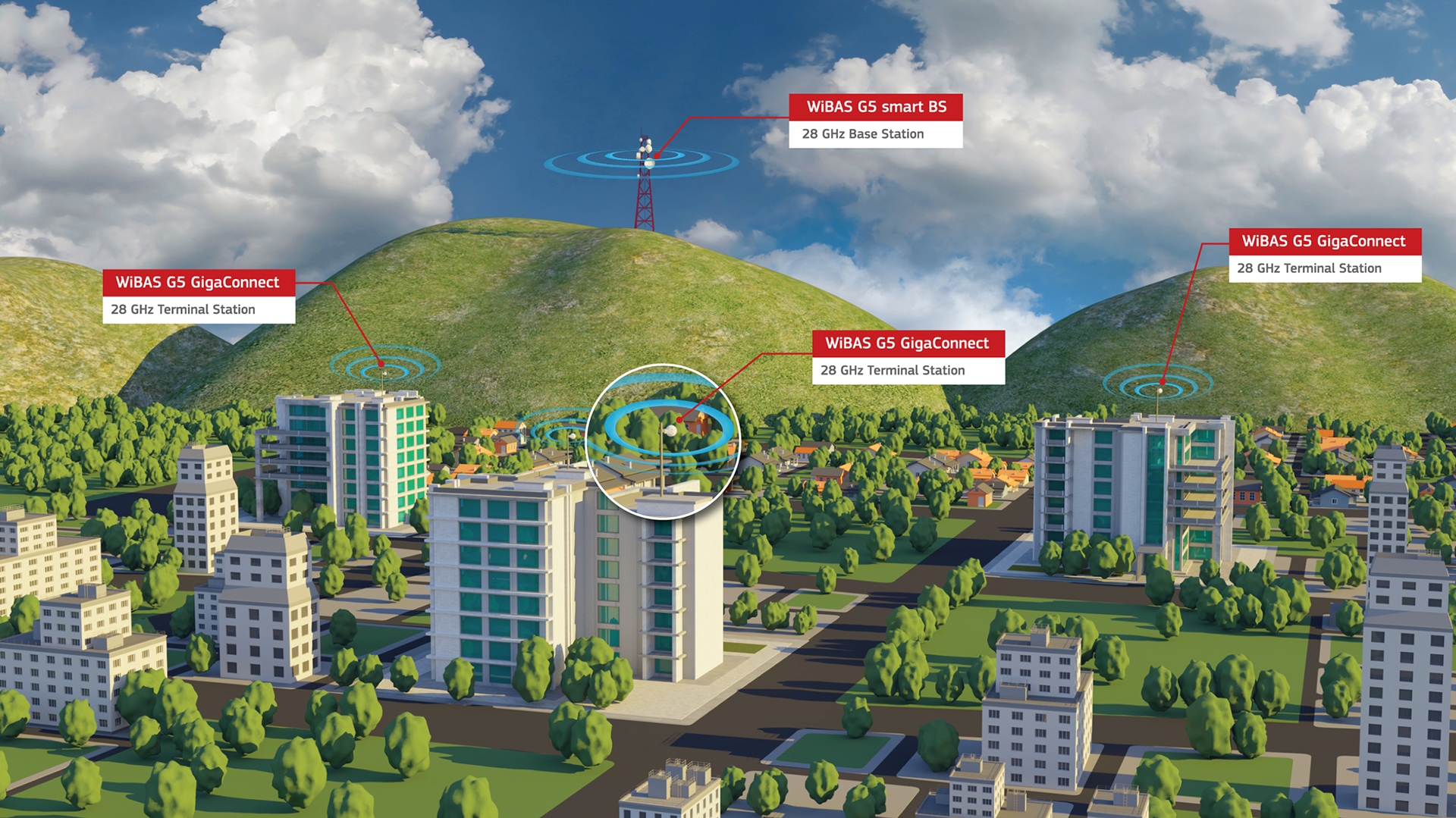
Fixed Wireless Access is a broadband delivery method that employs wireless technology to connect homes or businesses to the internet. Unlike fiber or cable, FWA relies on base stations to transmit radio signals to Customer Premises Equipment (CPE). This wireless approach offers a cost-effective "last-mile" solution, especially in locations where deploying wired infrastructure is impractical or expensive.
Why the 28GHz Band?
The 28GHz band is part of the mmWave spectrum and offers ultra-fast, low-latency communication. It has gained popularity for its suitability in high-capacity data transfer. Key attributes include:
- High Bandwidth: Delivers gigabit-speed connections, essential for MDUs with high user density.
- Low Latency: Enables real-time applications such as video conferencing and online gaming.
- Efficient Spectrum Use: Offers better performance in dense urban environments compared to traditional technologies.
Advantages of 28GHz FWA in MDUs
- High-Speed Connectivity: The 28GHz band supports multiple tenants simultaneously without significant service degradation, even during peak hours.
- Scalability: Service providers can expand coverage within buildings or across neighborhoods without major infrastructure overhauls.
- Lower Deployment Costs: By leveraging wireless infrastructure, FWA reduces the need for costly fiber installations.
- Reliability: The dedicated spectrum ensures stable, interference-free connections in dense urban settings.
Challenges in Deploying mmW FWA
Despite its benefits, FWA deployed in 28GHz and 29/31GHz bands presents several challenges:
- Line-of-Sight (LoS) Requirements: High-frequency signals are easily obstructed by walls and other obstacles, requiring clear LoS between base stations and CPE.
- Signal Interference: Weather conditions and physical barriers can impact signal quality.
Addressing Deployment Challenges
Overcoming the obstacles to implementing reliable and scalable mmW FWA networks in the 28GHz and 29/31GHz bands involves the following strategies:
- Site Surveys and Network Planning: Conducting thorough site surveys and using advanced planning tools ensures optimal placement of base stations and CPEs, addressing LoS challenges and minimizing interference.
- Regulatory Compliance: Adhering to spectrum usage regulations, building codes, and permit requirements is critical for smooth and lawful deployment.
- Network Monitoring and Management: Continuous performance monitoring optimizes signal quality, adjusts bandwidth allocation, and ensures uninterrupted high-speed connectivity for residents.
Conclusion
The 28GHz and 29/31GHz bands are revolutionizing broadband connectivity for MDUs, offering high-speed, scalable, and cost-effective solutions. Although deployment challenges such as LoS limitations and signal interference persist, strategic planning and the use of advanced network technologies can overcome these hurdles. By addressing these challenges, mmW FWA networks have the potential to empower urban/suburban residents with reliable, high-speed internet access that supports modern, data-intensive lifestyles. With its promising capabilities, mmW FWA is poised to become a cornerstone of urban/suburban broadband innovation and an excellent complement or alternative to fiber.